

The most comfortable golf shoes for golfers over 40 share three traits: a wider toe box, real arch support, and a break-in period close to zero. The FootJoy Pro|SL leads the field overall, the ECCO Biom C4 is the better call for bad knees and joint pain, and the Skechers Blade Tour Slip-Ins solve wide feet and bunion pressure.
Feet change after 40. The fat pad under your heel and forefoot thins, arches that held their shape for two decades start to flatten, and a shoe that felt fine at 30 can leave you limping by the back nine. Comfort is not a marketing word here.
We built these picks from manufacturer technical specs and patterns across verified Amazon reviews from golfers who identified their age bracket, not a dedicated wear-test panel. The full disclosure is in the methodology box below.
Key Takeaways
- Best overall: FootJoy Pro|SL, wide toe box and Fine Tuned Foam cushioning, the most consistently praised comfort shoe across 40+ reviewers.
- Best for bad knees and joint pain: ECCO Biom C4, BIOM Natural Motion keeps the foot low and stable, reducing the jarring that aggravates knee and hip pain over 18 holes.
- Best for walking 18 holes: FootJoy Flex XP, a 14-ounce shoe with zero break-in period and a soft EVA midsole built for golfers who walk instead of ride.
- Best for wide feet: Skechers Blade Tour Slip-Ins, a podiatrist-certified Arch Fit insole and a slip-in design that removes the lacing pressure that causes bunion pain.
- Best value: Puma Ignite Elevate 2, a full-length foam midsole and waterproof upper for meaningfully less than the premium picks above.
Quick Comparison: Most Comfortable Golf Shoes for Golfers Over 40
| Shoe | Best For | Standout Comfort Tech | Fit Type |
|---|---|---|---|
| FootJoy Pro|SL | Best overall | Fine Tuned Foam cushioning | Wide, rounded toe box |
| ECCO Biom C4 | Bad knees, joint pain | BIOM Natural Motion + BOA fit | True to size, dial adjustment |
| FootJoy Flex XP | Walking 18 holes | Zero break-in, 14 oz per shoe | Standard fit, narrow heel |
| Skechers Blade Tour Slip-Ins | Wide feet | Arch Fit insole, hands-free slip-in | Generous forefoot, no-tie |
| Puma Ignite Elevate 2 | Best value | Full-length IGNITE foam midsole | True to size, PWRSaddle lockdown |
How We Picked These Shoes
We have not yet run a dedicated wear-test panel on golf shoes. That is coming, but it was not ready in time for this guide, and we would rather tell you that than imply testing we have not done.
Instead, we built this list of comfortable golf shoes from two sources: each manufacturer’s published technical specs (cushioning material, midsole construction, fit last, warranty terms), and patterns across verified Amazon reviews from buyers who identified as 40 or older in their written review text. We specifically filtered for complaints or praise tied to arch support, toe box width, and break-in time rather than generic star ratings.
Evidence mode: Amazon Review Mining and Manufacturer Input. This is the same honest disclosure standard we apply to any buying guide that has not yet gone through our own hitting or wear test.
Our Top Picks Reviewed
Each of these five comfortable golf shoes solves a different version of the same complaint. Read the “best for” line under each pick before the pros and cons, since the right choice depends on where your discomfort actually shows up.
FootJoy Pro|SL: Best Overall for Golfers Over 40
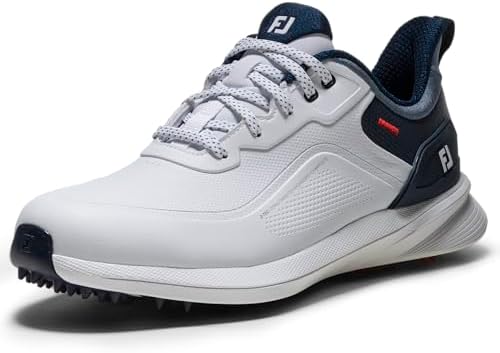
The FootJoy Pro|SL wins the overall spot because it solves the two complaints that show up most in 40+ golfer reviews: a toe box that feels narrow by hole 10, and a spikeless shoe that never quite breaks in. FootJoy built the Pro|SL on a rounded Laser Plus last with a wider forefoot, then layered in Fine Tuned Foam for the kind of supple cushioning most spikeless shoes only claim to have.
The Infinity outsole adds stability without the stiffness that makes some spikeless shoes feel like standing on a board. For a golfer managing early plantar fasciitis or a foot that has simply spread with age, that combination of width and give matters more than any single spec on the box.
- Pros: Wide, rounded toe box, Fine Tuned Foam cushioning, stable Infinity outsole, spikeless comfort
- Cons: Premium price point, standard widths run closer to true-to-size than the name implies for genuinely wide feet
- Best for: Golfers over 40 who want the single most complete comfort shoe on the market and are willing to pay for it
If a wider toe box alone does not solve your comfort problem, and the pain sits more in your knees or hips by the back nine, the ECCO Biom C4 below addresses a different mechanism entirely.
ECCO Biom C4: Best for Bad Knees and Joint Pain
Joint pain during a round rarely starts in the foot. It starts with how much shock travels up through the ankle, knee, and hip on every step across 18 holes of uneven turf. ECCO’s BIOM Natural Motion Technology keeps your foot closer to the ground than a typical golf shoe, which shortens the lever arm your joints have to control on every stride.
GORE-TEX SURROUND construction wraps the shoe in waterproofing while an EXHAUST GRID still lets air move underfoot, so you are not trading dry feet for hot feet. The BOA Fit System replaces laces with a dial, which matters on mornings when bending down to tie a shoe is itself the first discomfort of the day.
- Pros: BIOM Natural Motion low-to-ground platform, BOA dial fit, GORE-TEX waterproofing with ventilation, ECCO Performance Leather upper
- Cons: Runs true to size with limited wide-width availability, higher price than the FootJoy Flex XP and Puma picks
- Best for: Golfers over 40 whose comfort problem shows up in the knees, hips, or lower back rather than the feet themselves

A shoe that reduces joint shock helps, but it works best paired with mobility work that keeps hips and knees loose before you reach the first tee. Our 10-minute pre-round routine covers the specific stretches that pair well with a low-impact shoe like this one.
FootJoy Flex XP: Best for Walking 18 Holes
Weight matters more than most golfers realize when you are walking instead of riding. The FootJoy Flex XP weighs roughly 14 ounces per shoe at a size 10, noticeably lighter than most spiked alternatives, and it needs zero break-in time.
That second point is what Amazon reviewers over 40 mention most: no blister week, no stiff first three rounds, just comfortable from the first tee shot. The soft EVA midsole and Versa-Trax outsole deliver the mesh-upper, athletic-shoe feel that has taken over golf footwear, and a removable insole means you can drop in your own orthotic if you already use one.
- Pros: Lightweight at 14 oz per shoe, zero break-in period, removable insole for orthotics, integrated lacing for midfoot support
- Cons: Narrower heel fit than the Pro|SL, 1-year waterproof warranty is shorter than some competitors
- Best for: Golfers over 40 who walk most or all of their rounds and want the lightest shoe in this group

Walking comfort does not stop at your feet. If the rest of the round is what wears you down, our best electric push carts for golfers over 40 guide covers the equipment change that removes the other source of fatigue: pushing a loaded bag uphill for four hours.
Skechers Blade Tour Slip-Ins: Best for Wide Feet
Skechers built the Blade Tour Slip-Ins around a real problem: golfers with wide feet or bunions who fight their shoes on every lace-up. The hands-free, slip-in design removes lacing pressure entirely, and the Arch Fit insole is podiatrist-certified, developed from more than 120,000 foot scans rather than a single designer’s guess at where an arch should sit.
Hyper Burst Pro cushioning and Eco Flight foam handle shock absorption, while the Heel Pillow keeps your foot from sliding inside a shoe with no laces to cinch it down. This is the pick if bending over to tie a shoe is already a small ordeal before you have hit a single shot.
- Pros: Hands-free slip-in design, Arch Fit podiatrist-certified insole, generous forefoot room, APMA Seal of Acceptance
- Cons: Slip-in fit takes some golfers a round or two to trust on quick lateral movement
- Best for: Golfers over 40 with wide feet, bunions, or limited flexibility for bending down to tie laces

Grip pressure and lacing pressure often show up together for golfers managing arthritis or joint stiffness in the hands. Our best golf grips for arthritis guide addresses the other half of that equation.
Puma Ignite Elevate 2: Best Value
Not every golfer over 40 needs to spend premium-shoe money to solve a comfort problem. The Puma Ignite Elevate 2 uses a full-length IGNITE foam midsole for the kind of step-in cushioning that used to require a much pricier shoe, at a cost that undercuts every other pick on this list.
The PWRSaddle locks the foot down without needing a tight lace job, and a midfoot shank adds torsional stability so the shoe does not twist underfoot during the swing. The EXOSHELL waterproof upper carries a 1-year warranty, standard for this price tier.
- Pros: Full-length IGNITE foam midsole, PWRSaddle lockdown fit, midfoot torsional stability, lowest price in this group
- Cons: Softer, less structured cushioning than the FootJoy or ECCO picks, which some golfers with severe overpronation may not prefer
- Best for: Golfers over 40 who want real comfort upgrades without paying premium-shoe prices

A comfortable shoe only helps if the rest of your bag is not working against you. Our best golf travel bags guide covers lightweight options that keep your total carried or cart-loaded weight down across a full season.
Why Comfort Breaks Down After 40
Most golfers assume shoe discomfort is about fit alone. Fit matters, but the bigger mechanism is what happens to the foot itself with age. The fat pad under the heel and metatarsal heads thins measurably after 40, which is the body’s natural shock absorber losing material it does not replace on its own.
Arches that held their shape through your 20s and 30s also start to flatten under decades of repeated load. A shoe with real arch support is not a luxury feature at that point. It is compensating for something your foot used to do without help.

Plantar fasciitis, a common source of heel pain across 40+ golfers, often responds better to a shoe change than to stretching alone, though the two work best together. Our best golf rotation exercises for over 40s guide covers the mobility side of that equation for golfers managing stiffness through the hips and lower back as well.
Which Comfort Problem Do You Actually Have?
Not every golfer over 40 needs the same comfortable golf shoes. Match your specific complaint to the pick below instead of defaulting to whichever shoe has the best overall reviews.
- Toe box or bunion pain: The Skechers Blade Tour Slip-Ins or FootJoy Pro|SL solve this directly with a wider forefoot and no lacing pressure.
- Knee, hip, or lower back pain during the round: The ECCO Biom C4’s low-to-ground platform reduces the shock your joints absorb on every step.
- General fatigue by the back nine from walking: The FootJoy Flex XP’s lighter weight and zero break-in period matter more here than any cushioning spec.
- Budget is the deciding factor: The Puma Ignite Elevate 2 delivers most of the comfort technology in this guide at the lowest price.
Verdict: Which Comfortable Golf Shoe to Buy
For most golfers over 40 chasing comfort first, the FootJoy Pro|SL is the shoe to start with. It solves the widest range of common complaints, a narrow toe box, harsh spikeless cushioning, and long break-in time, in a single pair.
If your comfort problem is joint pain rather than foot pain, the ECCO Biom C4 is worth the premium. If you walk most of your rounds, the FootJoy Flex XP’s weight advantage will matter more by hole 15 than any single cushioning claim.
Most comfortable golf shoes solve the ground-up half of a golfer’s fatigue problem. The other half is often the equipment itself. Our best game-improvement irons for golfers over 40 guide covers the club side of playing a full round without your body working against you.
Frequently Asked Questions
What are the most comfortable golf shoes for golfers over 40?
The FootJoy Pro|SL is the most consistently comfortable overall pick for golfers over 40, combining a wide toe box with Fine Tuned Foam cushioning. Golfers with joint pain rather than foot pain often do better with the ECCO Biom C4’s low-to-ground BIOM Natural Motion platform.
Do golf shoes need to be a half size bigger after 40?
Often, yes. Feet tend to lengthen and widen slightly with age as the arch flattens and ligaments loosen, so a shoe that fit at 30 can feel tight at 45. Trying a half size up, particularly in a shoe with a rounder toe box like the Pro|SL, resolves more comfort complaints than switching brands entirely.
What golf shoe features matter most for plantar fasciitis?
Arch support and heel cushioning matter more than brand name. Look for a molded or podiatrist-certified insole like Skechers’ Arch Fit, and avoid flat, minimal-cushion spikeless designs that offer no structure under the arch.
Are spikeless golf shoes more comfortable than spiked shoes for older golfers?
Generally yes, for golfers who value all-day comfort over maximum traction. Spikeless outsoles distribute pressure across a wider footprint and typically use softer midsole foam, which reduces the point-loading that spiked shoes create under the ball of the foot on every step.
How often should golfers over 40 replace their golf shoes?
Every 300 to 500 rounds of walking, or sooner if the midsole cushioning feels noticeably flatter than when new. Compressed cushioning stops absorbing shock well before the upper shows visible wear, which is why a shoe can look fine and still be contributing to joint pain.
Is it worth paying more for a premium golf shoe if I only play occasionally?
Not necessarily. Among comfortable golf shoes, the Puma Ignite Elevate 2 delivers most of the comfort technology found in premium models at a lower price, a reasonable match for golfers playing fewer than 20 rounds a year. Frequent walkers logging 50-plus rounds a season get more return from the FootJoy Pro|SL or ECCO Biom C4’s more durable construction.
