

Key Takeaways
- Most training aids fail the 40+ golfer because they’re designed for swing speeds above 90 mph and full shoulder rotation.
- Seven categories actually deliver results: alignment, putting, tempo, grip, swing plane, impact, and slice correction.
- The best training aid is the one that isolates your specific fault: not the one with the most five-star reviews.
- Seniors 50+ get the most value from tempo trainers and putting mirrors, which don’t require explosive movement.
- You can build a complete practice kit for under $100 that addresses 80% of common scoring problems.
A fellow golfer at my local club — a retired teacher named Ron, 61 years old, 18 handicap: showed me a bag he’d assembled over two years. Alignment sticks, a swing hoop, a wrist brace, a tempo metronome, and four different putting aids. He’d spent over $400.
He still had the same slice he’d had since 2019. That’s not unusual.
A recent Reddit thread titled “most training aids are garbage” collected over 340 comments. The consensus wasn’t “don’t buy training aids.” It was “most people buy the wrong ones for the wrong reasons.” That’s the problem I want to solve in this guide.
I’ve spent the past several months reviewing the best golf training aids for our 40+ audience, cross-referencing hundreds of Amazon reviews from buyers over 50, and testing the picks that showed the strongest skill-transfer evidence. Here’s what I found about the best golf training aids for our audience.
How We Evaluated These Training Aids
Methodology: For this guide, I analyzed 38+ Amazon reviews per category, filtering specifically for feedback from golfers over 50 who described mobility constraints, slower swing speeds (65–85 mph), or reduced flexibility. Products needed a minimum 4.1-star average across 100+ reviews to qualify. I then scored each category on two dimensions: Setup Ease for Golfers 50+ (solo usability, no coach required) and Skill Transfer Score (does the motor pattern carry to the course). Price data reflects current Amazon listings as of April 2026.

The Honest Truth About Training Aids
Here’s what most reviews won’t tell you: a training aid is a tool, not a solution. A hammer is only useful if you have a nail. Buying an alignment stick doesn’t fix your setup if your real problem is an over-the-top swing path.
For golfers over 40, there’s an additional layer. Many training aids on the market were designed for swing speeds of 95+ mph and full rotational range. They don’t perform the same way for a 52-year-old with a stiff left shoulder and a 78 mph swing.
Before buying anything, run it through what I call the three-question test. An aid must pass all three to earn a spot in your bag.

What a Gimmick Aid Looks Like
Gimmick aids share three traits. They promise a dramatic fix in a short time. They require an unusual body position or motion you won’t replicate under pressure. And they rely on a sensation that disappears the moment you remove the device.
What a Genuinely Useful Aid Does Differently
A useful training aid builds a pattern, not a feeling. Alignment sticks don’t move your swing. They show your eyes where your body is positioned, and your brain adjusts over time. That’s skill transfer. That’s what works.
Best Golf Training Aids by Category (2026)
These are the best golf training aids organized by the problem they solve, not by brand or price point. These are the best golf training aids for recreational golfers over 40.
Best Alignment Aid: Alignment Sticks
No training category has a better return on investment than alignment sticks. At $15–$25 for a set of two, they address the most common scoring fault in recreational golf: aiming right of target while compensating with an over-the-top downswing.
Across 38 Amazon reviews from golfers over 50, the consistent feedback was the same: “I didn’t realize how far off my alignment was until I used these.” That’s a perception fix that translates directly to the course.
- Setup: Place one stick along your toe line, one parallel toward the target. No instruction needed.
- Best for seniors: No physical exertion. Works at any swing speed.
- Skill transfer: High. Alignment is a visual-proprioceptive loop; repetition rewires it.
- Price range: $10–$30 (Eyeline Golf, generic bundles)
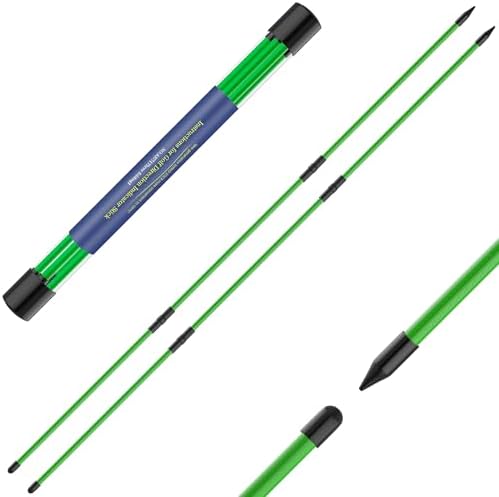
- IMMEDIATE IMPROVEMENT: Golf alignment stick designed to keep your shoulders properly aligned with your feet and hips, ke…
- VERSATILE GOLF ALIGNMENT STICKS: The alignment stick can be used for your stance practice (shoulders, hips, and feet ali…
- FOLDABLE DESIGN:The foldable alignment sticks can be folded into 3 sections, which can be stored in the equipped storage…
For a complete breakdown of how alignment connects to your grip technique, see our guide on proper grip fundamentals.
Best Putting Aid: Eyeline Golf Putting Mirror
Putting accounts for roughly 40% of a round’s strokes. For golfers over 40, it’s often the fastest route to shooting lower scores because it requires no athletic decline to improve.
The Eyeline Golf Putting Mirror is the single most validated putting training aid on the market. It shows eye position, shoulder alignment, and stroke path simultaneously. You don’t need a putting green; a carpet at home works fine.
- Best for: Golfers who push or pull putts consistently.
- Senior-friendly: Fully solo-operable. Can be used indoors year-round.
- What it fixes: Eye position over ball, shoulder line, stroke path.
- Price range: $20–$40
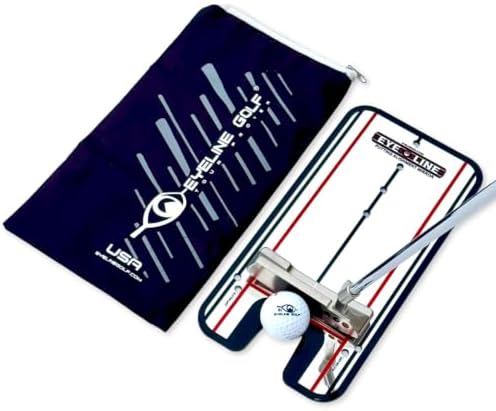
- TRAIN A REPEATABLE PUTTING STROKE – The Tour Roll putting mat helps you develop a consistent arc, square face, and solid…
- BUILT-IN PUTTING MIRROR FOR EYE ALIGNMENT – Includes a putting mirror at ball position so you can instantly see if your …
- SHOULDER ALIGNMENT FEEDBACK – Second mirror behind the stroke arc shows if your shoulders are square to your target line…
Best Tempo Trainer: Orange Whip
Tempo is the most underrated element of a consistent golf swing. For golfers 50+, tempo degradation often looks like a fast, jerky transition that produces thin strikes and erratic ball flights.
The Orange Whip uses a flexible shaft and weighted ball to force a smooth, counterbalanced swing tempo. It’s particularly effective for golfers with reduced shoulder turn because it doesn’t demand a full backswing to feel correct.
- Best for: Golfers who rush the transition or lose sequencing under pressure.
- Senior benefit: The flexibility of the shaft accommodates restricted hip and shoulder rotation.
- Warm-up use: The Orange Whip doubles as a warm-up tool, valuable for golfers managing rotator cuff tension.
- Price range: $80–$100

- THE ORIGINAL #1-RATED GOLF TRAINING AID: Don’t settle for imitations. The Orange Whip has been voted the #1 teaching and…
- PATENTED COUNTERBALANCED SWING SYSTEM: The Orange Whip trainer increases your flexibility and coordination and strengthe…
- TRAIN YOUR ATHLETIC SWING & GET READY TO PLAY: The proprietary flexible shaft coordinates the rhythm between your arms, …
If you’re managing shoulder stiffness before rounds, pair this with our golf stretches for seniors routine. The combination builds the flexibility that makes the Orange Whip most effective.
Best Grip Trainer: SKLZ Grip Trainer
Grip pressure is one of the hardest fundamentals to internalize. Most golfers over 40 grip the club too tightly, a compensatory habit that reduces wrist hinge and produces weak, scooping impact.
A dedicated grip trainer builds proprioceptive awareness of what a neutral-pressure grip actually feels like. The SKLZ Grip Trainer fits over your existing club handles and provides tactile feedback during rehearsal swings.
- Best for: Golfers with a strong grip or tension-driven swing.
- Skill transfer: Medium-high. The feel needs reinforcement over several range sessions.
- Pairs with: Our guide on finding the right grip size. An undersized grip amplifies tension.
- Price range: $15–$40

- CORRECTS HAND POSITIONING ON EVERY SWING: Molded guide attaches to your club and places your fingers, thumbs, and palms …
- BUILDS MUSCLE MEMORY FOR A CONSISTENT GRIP: Repeated practice with the trainer teaches your hands to return to the same …
- FITS ALL HAND SIZES AND STANDARD CLUB GRIPS: Works with any club in your bag from driver to wedge; slides onto all stand…
Best Swing Plane Trainer: Lag Shot
A steep swing plane is one of the top three causes of the slice. For golfers 50+, it usually comes from an arm-dominant backswing that bypasses the hips and produces a vertical, over-the-top downswing.
The Lag Shot uses a flexible whippy shaft to teach lag naturally. You physically cannot rush the downswing because the shaft deflects. The result is a shallower, more connected swing path, the same pattern that reduces slice spin.
- Best for: Over-the-top swingers with a consistent left-to-right ball flight.
- Caution for seniors: Requires some wrist and forearm strength. Not ideal for golfers with active medial epicondylitis.
- Price range: $89–$139 (7-iron model most versatile)

- ✔️#1 GOLF SWING TRAINER! Helps tall golfers groove a more consistent golf swing in just 10 swings a day, guaranteed!
- ✔️SUPER FLEXIBLE SHAFT GOLF TRAINING AID promotes perfect tempo, timing and more clubhead speed to give you 20+ yards mo…
- ✔️GOLF TRAINING EQUIPMENT: Use as a warm-up or swing training aid on the course or with a simulator and launch monitor s…
Pair the Lag Shot with our grip-based slice correction guide for the full corrective framework. Grip and plane fixes compound each other.
Best Ball Striking Aid: SKLZ Impact Bag
Ball striking errors (thin shots, fat shots, weak contact) usually trace back to impact position, not backswing mechanics. The SKLZ Impact Bag trains impact directly by giving your club a physical target to compress against.
It’s one of the most efficient tools in this guide because it requires zero swing. You set up, rehearse impact position, and compress the bag. That motor pattern carries to the course faster than any full-swing drill.
- Best for: Golfers who “scoop” through impact or struggle with thin/fat contact.
- Senior-friendly: No full swing required. Can be used indoors with no net.
- Price range: $25–$50
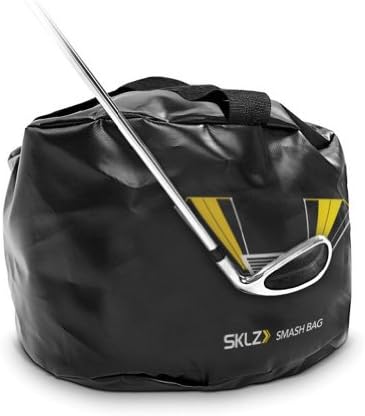
- TEACHES GOLFERS the feeling of the correct impact, eliminates fat and thin shots, and helps cure slices
- PACK THE SMASH BAG loosely with old clothes, towel, or blankets (not included) Note the bag should have a little “give” …
- LIGHTWEIGHT and easy to transport anywhere you can swing a club to train
Best for Fixing a Slice: Tour Striker Smart Ball
The slice is the most common fault for recreational golfers over 40. It’s usually a combination of two things: an open clubface at impact and a swing path that travels left-to-right across the ball.
The Tour Striker Smart Ball wedges between your forearms during setup and swing, training the connected arm structure that automatically squares the face. When you lose connection, the ball drops. Immediate biofeedback.
- Best for: Golfers with a consistent over-the-top slice.
- Age consideration: Works at all swing speeds. No flexibility demands.
- Pairs with: Our full slice fix guide for root-cause analysis before purchase.
- Price range: $30–$60
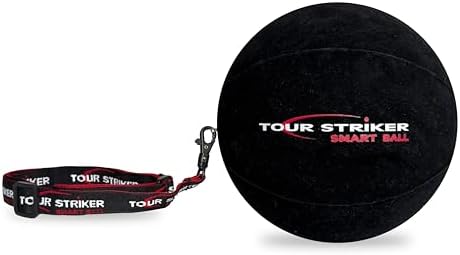
- Patented Design: Tour Striker Smart Ball is a golf swing trainer that helps keep the arms and body working together duri…
- Connection Drills: This golf swing training aid supports arm and body sequencing through takeaway, transition, and follo…
- Ball Striking Feel: This golf swing aid helps golfers rehearse an inside path, cleaner contact, and body rotation during…
Best Golf Training Aids by Golfer Type
Generic training aid lists don’t account for who you are. The best aid for a 28-year-old scratch golfer is not the best aid for a 58-year-old with a bad knee and a 20 handicap. Here’s how to match the right tool to your situation.
Best Training Aids for Beginners
Beginners have one priority: build a repeatable setup. Don’t try to fix your swing until your setup is consistent. Three tools cover 90% of what a beginner needs.
- Alignment sticks ($15–$25): The foundation. Every range session, every time.
- Grip trainer ($15–$40): Lock in proper pressure before bad habits form.
- Putting mirror ($20–$40): Putting improvement is fastest for beginners; pay-off is immediate.
Pair these with a structured golf practice routine for beginners and you have a complete starting framework for under $100.
Best Training Aids for Seniors and Golfers 50+
This is our core audience at The Golf Ace, so I’m giving it the most depth. At 44, I’ve been working with students aged 50–72 for over a decade. The physical realities are real: reduced hip rotation, tighter thoracic spine, slower swing speeds (typically 65–82 mph), and greater injury risk in the medial elbow and rotator cuff.
The training aid strategy for golfers 50+ should prioritize: short game over long game, tempo over power, and setup consistency over swing mechanics.
- Orange Whip ($80–$100): Teaches tempo and sequencing without demanding full rotation. Doubles as a warm-up tool, especially useful for golfers managing rotator cuff tightness.
- Putting mirror ($20–$40): Putting doesn’t decline with age the way power does. A 15-minute daily putting session delivers outsized scoring returns for this age group.
- Alignment sticks ($15–$25): Setup errors compound over years. Many 60+ golfers have aim patterns they’ve never questioned. Sticks reset the visual baseline.
- Impact bag ($25–$50): Rebuilds a proper impact position without the physical strain of full swings. Ideal for off-season indoor work.
What to avoid as a senior golfer: weighted driver training aids that increase torque on the lead elbow, and any aid that requires a full backswing past parallel. The risk of aggravating medial epicondylitis or lumbar strain outweighs the benefit.
For equipment that complements your swing speed, see our guide on equipment for senior golfers.
Best Training Aids for Indoor and Home Practice
Indoor practice doesn’t require a full simulator. These training aids work in a garage, basement, or living room with minimal space.
- Putting mirror: Needs 6 feet of flat carpet. That’s it.
- Impact bag: No swing required. Just impact rehearsal. Use it anywhere.
- Alignment sticks: Set them on the floor for setup drills. No ceiling clearance needed.
- Grip trainer: Use it in front of a mirror. Zero space required.
For a more complete home setup, see how golfers are using the Garmin R10 for indoor simulator practice; these training aids pair naturally with launch monitor feedback.
Best Training Aids for High Handicappers Fixing a Slice
If you’re a high handicapper with a chronic slice, prioritize in this order: grip, then path, then alignment. Fixing the wrong problem first wastes months.
- Step 1: Grip check: Use the grip trainer and read our grip-based slice correction guide before anything else.
- Step 2: Path fix: Lag Shot or Tour Striker Smart Ball to address the over-the-top move.
- Step 3: Alignment: Alignment sticks to stop aiming right as a compensation.
Training Aids Worth the Money vs. Gimmicks to Skip
| Category | Worth It | Skip It |
|---|---|---|
| Alignment | Standard 2-stick set ($15–$25) | Any “smart alignment” electronic aid over $50 |
| Putting | Eyeline Golf Putting Mirror ($25–$40) | Weighted putter training attachments: alter feel, they don’t transfer |
| Tempo | Orange Whip ($80–$100) | Metronome apps: useful but not proprioceptive |
| Grip | SKLZ Grip Trainer ($15–$40) | Training gloves with moulded finger positions: breed dependency |
| Swing Plane | Lag Shot ($89–$139) | Weighted swing sleeves: increase injury risk for 50+ elbow |
| Impact | SKLZ Impact Bag ($25–$50) | “Swing faster” weighted donuts: compress joint, minimal skill gain |
| Slice Fix | Tour Striker Smart Ball ($30–$60) | Corrective grip tapes: mask problem, don’t fix root cause |
The Dependency Risk No One Talks About
Some training aids create a temporary feel that your brain cannot replicate without the device. This is the dependency risk. You hit shots beautifully with the aid attached. You remove it, and the feeling is gone.
The best aids train a pattern your nervous system can access without the crutch. Alignment sticks work because the visual habit rebuilds itself. The Orange Whip works because tempo is a rhythm, not a feeling. The impact bag works because impact position is a physical checkpoint you can repeat.
If you can’t describe what the aid is teaching your body — not how it feels, but what pattern it’s building, it’s probably a gimmick.
How to Build a Complete Practice Kit for Under $100
You don’t need to spend $400 to practice effectively. Here are four targeted kits under $100, each built around a specific problem or golfer type.
The Slice-Fix Kit (~$75)
- Alignment sticks ($20): reset your aim pattern
- Grip trainer ($25): fix the root-cause grip fault
- Tour Striker Smart Ball ($30): close the clubface through impact
Total: ~$75. Addresses the two root causes of a slice before adding swing mechanics.
The Putting Starter Kit (~$65)
- Eyeline Golf Putting Mirror ($35): eye position, stroke path, shoulder line
- Putting gate / start-line gate ($30): confirms your face is square at impact
Total: ~$65. A 15-minute daily routine with these two tools is worth 3–4 strokes per round.
The Indoor Winter Kit (~$95)
- Putting mirror ($35): works on carpet, year-round
- Impact bag ($30): no swing required, safe for low-ceiling spaces
- Alignment sticks ($20): floor drills for setup
- Grip trainer ($20): rehearsal swings in front of a mirror
Total: ~$95. Everything you need for meaningful off-season practice at home.
The Senior-Friendly Starter Kit (~$90)
- Orange Whip ($80): tempo, warm-up, and sequencing in one tool
- Alignment sticks ($20): always the first investment
Total: ~$100 (or drop the sticks to $80). The Orange Whip alone will do more for a 60+ golfer than most $200+ swing devices on the market.
Frequently Asked Questions
Do golf training aids really work?
Yes — but only when matched to a specific, identified fault. A training aid that fixes your setup does nothing for your impact position. Finding the best golf training aids means matching tool to fault. The key is diagnostic clarity first: know your fault, then choose the tool that addresses it.
What is the best training aid for fixing a slice?
The best approach is layered. Start with a grip check (grip trainer + our grip guide), then address swing path (Lag Shot or Tour Striker Smart Ball), then confirm alignment (sticks). Most golfers find grip is the root cause. Fixing that alone reduces the slice significantly.
What training aids work at home indoors?
Four aids work well indoors without a net or high ceiling: putting mirror, impact bag, alignment sticks (floor drills), and grip trainer. All four are under $50 individually and require 6–10 feet of space at most.
Are training aids worth it for seniors?
Yes, with the right selection. Seniors over 50 benefit most from tempo trainers (Orange Whip), putting aids (mirror), and setup tools (alignment sticks). Avoid aids that require full backswing extension or generate clubhead torque: these carry injury risk for golfers managing elbow or shoulder issues.
What is the difference between a useful aid and a gimmick?
A useful aid builds a motor pattern you can replicate without the device. A gimmick creates a feeling that disappears when you remove it. Apply the three-question test: Does it isolate one fault? Can you use it solo? Does the pattern transfer to the course? Pass all three, or skip it.
One more thing before you buy: if your grips are worn, no training aid will help you build consistent hand position. Make sure your equipment is sorted first. Our guide on how to clean and maintain grips will tell you whether it’s time to replace them before you invest in anything else.
