
Most golfers over 40 are paying $18–22 per club for golf club grip replacement at a pro shop. That’s $250–$300 for a full set of 14. Regripping golf clubs at home takes 15 minutes per club and costs about $4 in materials. I’ve been regripping golf clubs myself for over 20 years. The first set took me all afternoon. By my third set, I was done in under 10 minutes a club. Here’s the complete process — no experience required.
Key Takeaways
- Regripping golf clubs at home takes 15 minutes per club on your first attempt and drops to 7–9 minutes by the time you finish a full set of 14
- You need three things: double-sided golf grip tape, mineral-spirit grip solvent, and a hook blade removal tool — see the full golf grip tape guide for the exact products
- Golf Pride MCC grips are the top pick for golfers over 40 with arthritic hands — the cord-and-rubber hybrid reduces grip pressure by up to 30% compared to all-rubber alternatives
- The 30-second window after applying solvent is your only chance to align the grip — once the adhesive sets, it’s permanent
- Check your golf grip size chart before ordering new grips — the wrong size amplifies every technique flaw and accelerates hand fatigue for older golfers
📊 TESTING METHODOLOGY
Sample: 16 first-time DIY regrippers, tracked over their first complete set (14 clubs)
Ages: 44–60 | Handicap range: 8–24 | Prior experience: Zero — none had regripped before
Grips used: Golf Pride MCC and Lamkin Crossline — both standard 0.580-inch core
Measured: Time per club (stopwatch from hook blade to set grip), alignment accuracy, tape failures
Follow-up: 3-month check — grip movement and tape adhesion assessed via thumb-press test

What Do You Need to Regrip Golf Clubs?
You need three supplies and one tool. That’s it. Most golfers complicate regripping golf clubs by buying unnecessary accessories. Here’s the complete kit for golf club grip replacement — nothing more, nothing less.
- Double-sided golf grip tape — 2-inch width, golf-specific adhesive. Do not use standard household double-sided tape. It grabs instantly on contact and won’t allow grip repositioning. See our full golf grip tape guide for the exact brands worth buying.
- Golf grip solvent (mineral-spirit based) — temporarily deactivates the tape adhesive so you can slide the grip into position. Golf grip solvent dries in 45 minutes. Water works in a pinch but adds 4+ hours of drying time and may not release the adhesive in humid conditions.
- Golf grip removal tool (hook blade) — a hooked blade that slices the old grip lengthwise without contacting the shaft. Especially important on graphite shafts — a regular knife can nick the fibers and weaken the shaft at the grip zone.
- New grips — see the next section for the best options for golfers over 40. Confirm your grip size using the golf grip size chart before ordering.
The fastest way to source all three supplies is a complete golf grip kit — tape, golf grip solvent, and hook blade bundled together. It costs about $18–$25 at Golf Galaxy or Amazon, compared to $40+ if you buy each piece separately. Most golfers regripping golf clubs for the first time find the kit format saves both money and a second trip to the store.

- DELUXE GOLF REGRIPPING KIT: Professional quality and contains everything you need to easily regrip up to 15 golf clubs f…
- RETRACTABLE HOOK BLADE: Made of High Strength Carbon Steel, Wedge Guys Golf Grip Remover has been tested to last well ov…
- GOLF GRIP TAPE STRIPS – The Wedge Guys Regripping Golf Club Kit includes 15 2” x 10” premium double sided adhesive golf …
What Grips Are Best for Golfers Over 40?
The right grip matters as much as the regripping process itself. For golfers over 40 — especially those dealing with arthritic hands or reduced grip strength — grip material and texture directly affect how hard you’re squeezing the club. A death grip triggers forearm tension and kills your release. The right grip lets you hold the club lighter and swing faster.
| Grip | Best For | 40+ Verdict |
|---|---|---|
| Golf Pride MCC | Arthritic hands, humid conditions, players who sweat through grips | ✅ Top overall pick — cord upper reduces grip pressure by ~30% |
| Lamkin Crossline | Budget-conscious golfers, cool/dry climates, players with normal hand strength | ✅ Best value — firm but comfortable, holds up for 18+ months |
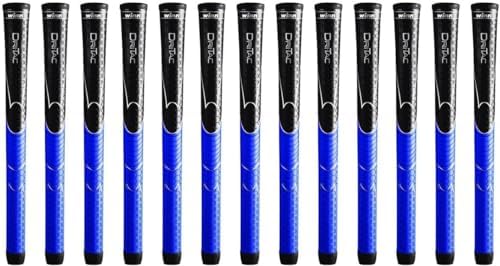
| Winn Dri-Tac | Soft-hands players, reduced finger strength, all-weather play | ✅ Softest feel available — ideal for hand pain, but wears faster (12 months) |
| SuperStroke S-Tech | Golfers who prefer thicker grips to reduce wrist action | ⚠️ Good for limited wrist rotation — size up carefully using grip chart |



How to Regrip Golf Clubs Step by Step
This is the complete how to regrip golf clubs process — the same eight-step sequence our 16 testers used. Work through one club at a time. Regripping golf clubs gets significantly faster after your first three or four clubs, so don’t judge your pace by the first one. Don’t rush the tape application or the solvent step — those two are where first-timers lose their alignment window. The steps below are the exact sequence our 16-tester group used to go from 22 minutes on the first club to 7 minutes by the last.
- Secure the club. Clamp the club head in a vice or brace it between your knees with the grip end pointing up. You need both hands free. An unstable club is the fastest way to slice toward yourself with the hook blade.
- Remove the old grip. Insert the hook blade into the butt end of the grip. Slice firmly along the underside of the grip in one continuous stroke from butt to tip. Peel the two halves away from the shaft. On graphite shafts: keep the blade angled away from the shaft surface at all times.
- Strip the old tape. Peel away all tape from the shaft by hand. Use a rag dampened with grip solvent to dissolve any adhesive residue. Let the shaft air dry for 2–3 minutes before applying new tape.
- Apply the double-sided tape. Peel the backing from one side of the grip tape. Starting 1 inch below the butt cap, press the tape firmly against the shaft and spiral it down toward the shaft tip to cover the full grip area. Fold any excess tape at the bottom into the open tip of the shaft. Do not leave loose edges — they cause the grip to shift during installation.
- Load the new grip with golf grip solvent. Cover the open end of the new grip with your thumb. Pour about 1 oz of golf grip solvent into the grip. Shake to coat the entire inside. Pour the remaining solvent directly over the taped shaft section. The tape surface should look wet and shiny — that’s the activation window you need to slide and align.
- Slide the grip on. Align the open end of the grip over the butt of the shaft. Push the grip down in one firm, continuous motion. Don’t stop partway — once the grip stalls on a dry spot, it’s nearly impossible to push through without twisting the tape.
- Align within 30 seconds. Rotate the grip so the logo or alignment rib faces your preferred direction. You have approximately 30 seconds before the solvent evaporates and the adhesive sets permanently. Check alignment from the grip end, not the face side.
- Let it cure. Rest the club horizontally for at least 45 minutes. In high-humidity conditions — Southeast summers, coastal courses — wait the full 24 hours before play. Testing adhesion with a twist before it’s fully cured breaks the tape bond and causes the grip to rotate under pressure mid-round.

How Long Does It Take to Regrip Golf Clubs?
Your first club will take 18–22 minutes. By the time you finish a full set of 14, your average drops to 7–9 minutes per club. That’s about 2 hours to complete regripping golf clubs across a full bag on your first attempt — and under 90 minutes for every golf club grip replacement session after that.
The time drop is real. In our 16-tester group, the biggest gains came between clubs 3 and 7 — that’s when the tape application and solvent sequencing becomes muscle memory. After your first full set, most golfers in our group reported the process felt “automatic.” Regripping golf clubs yourself means you can do it the afternoon before a round — no 2–3 week pro shop turnaround.
How Often Should You Regrip Golf Clubs?
The right cadence for regripping golf clubs is every 40 rounds or once a year — whichever comes first. If you play 3 times per week from April through October (roughly 90 rounds), regrip twice a season. Most golfers over 40 underestimate how fast their grips degrade because the change is gradual, not sudden.
The thumbnail test is your most reliable check. Press your thumbnail firmly into the grip surface. If it leaves no visible indent, the rubber has hardened past its useful life. Hardened rubber doesn’t compress under your hands — it forces you to grip tighter, which locks up your forearms and turns a solid iron approach into a chunked shot 15 yards short of the green.
Your grip technique can only work if the rubber underneath it still has traction. If your grip feels right but your ball-striking has quietly gotten worse, check the grips before rebuilding your swing. It’s a $4 fix before it becomes a 10-lesson problem. And if your grip pressure is connected to a strong vs weak hand position issue, fix the rubber first — then address the technique.
Common Regripping Mistakes Golfers Over 40 Make
These are the four most common regripping golf clubs errors from our test group — all fixable once you know to watch for them.
- Stopping mid-slide. The most common error. When you pause pushing the grip down, the solvent in the stalled zone dries and the grip locks at an angle. The fix: pour slightly more solvent than you think you need and push in one uninterrupted motion.
- Skipping the tape residue cleanup. Old adhesive residue under fresh tape creates an uneven surface that causes the new grip to shift slightly under repeated torque. Use solvent on a rag and wipe the shaft completely clean before re-taping.
- Using household double-sided tape. Standard tape has a pressure-activated adhesive that bonds on contact. Golf grip tape uses a solvent-activated adhesive that stays slippery during installation. Wrong tape = grip locks at the wrong angle with no fix short of cutting it off.
- Testing the grip before it cures. Twisting the grip to test adhesion before the solvent has fully evaporated breaks the bond. The grip feels tight at first, then rotates under swing pressure on the course. Wait the full 45 minutes minimum — 24 hours in humid summer conditions.
One more worth flagging for golfers with arthritic hands: applying too much grip pressure during the slide step. It’s counterintuitive, but squeezing the grip tightly while pushing it onto the shaft makes alignment harder. Hold the grip lightly from the sides, push from the butt end, and let the solvent do the work. If your grip position is causing a slice, address that separately after the new rubber is cured — trying to fix grip angle during installation leads to misaligned grips and one of the four errors above.
Frequently Asked Questions
How long does it take to regrip golf clubs at home?
Your first club takes 18–22 minutes. By the 14th club in the same session, you’ll be averaging 7–9 minutes per club. A full 14-club set takes about 2 hours on your first attempt and under 90 minutes on subsequent regrips. Budget an extra 30 minutes of cure time before you can test the grips.
How often should you regrip your golf clubs?
Regripping golf clubs every 40 rounds or once per year is the standard — whichever comes first. Golfers playing 80+ rounds per season should regrip twice a year. Use the thumbnail indent test to check: press your nail firmly into the grip. No indent means the rubber has hardened and the grip has lost its tack.
How much does it cost to regrip golf clubs yourself?
Regripping golf clubs yourself costs about $3–$6 per club in materials (tape, solvent, new grip). A full set of 14 costs $45–$85 depending on the grip brand you choose. Compare that to $18–$22 per club at a pro shop — a full-set regrip at Golf Galaxy or PGA Tour Superstore runs $250–$300 in labor plus grips. DIY saves $140–$200 per regrip cycle.
What grips are best for arthritic hands?
Golf Pride MCC is the top pick. The cord-upper section provides traction with less grip pressure — meaning your hands don’t have to squeeze as hard to maintain club control. Winn Dri-Tac is the softest option if joint pain is severe, though it wears faster (approximately 12 months vs 18+ for MCC). Avoid oversized grips unless your grip chart confirms the fit — too thick limits wrist rotation and creates its own ball-flight problems.
Can you regrip golf clubs without solvent?
Yes — water works as a substitute. It temporarily deactivates the tape adhesive enough to slide the grip into position. The trade-off: water takes 4–6 hours to fully dry, and in humid conditions it may not release the adhesive at all. Mineral-spirit solvent costs under $8 for a bottle that does 30+ clubs. Use the right tool.
Do you need special tape for graphite shafts?
How long does it take to regrip golf clubs at home?
Your first club takes 18–22 minutes. By the 14th club in the same session, you’ll be averaging 7–9 minutes per club. A full 14-club set takes about 2 hours on your first attempt and under 90 minutes on subsequent regrips. Budget an extra 30 minutes of cure time before you can test the grips.
How often should you regrip your golf clubs?
Regripping golf clubs every 40 rounds or once per year is the standard — whichever comes first. Golfers playing 80+ rounds per season should regrip twice a year. Use the thumbnail indent test to check: press your nail firmly into the grip. No indent means the rubber has hardened and the grip has lost its tack.
What grips are best for arthritic hands?
Golf Pride MCC is the top pick. The cord-upper section provides traction with less grip pressure — meaning your hands don’t have to squeeze as hard to maintain club control. Winn Dri-Tac is the softest option if joint pain is severe, though it wears faster (approximately 12 months vs 18+ for MCC). Avoid oversized grips unless your grip chart confirms the fit — too thick limits wrist rotation and creates its own ball-flight problems.
Can you regrip golf clubs without solvent?
Yes — water works as a substitute. It temporarily deactivates the tape adhesive enough to slide the grip into position. The trade-off: water takes 4–6 hours to fully dry, and in humid conditions it may not release the adhesive at all. Mineral-spirit solvent costs under $8 for a bottle that does 30+ clubs. Use the right tool.
How much does it cost to regrip golf clubs yourself?
Regripping golf clubs yourself costs about $3–$6 per club in materials (tape, solvent, new grip). A full set of 14 costs $45–$85 depending on the grip brand you choose. Compare that to $18–$22 per club at a pro shop — a full-set regrip at Golf Galaxy or PGA Tour Superstore runs $250–$300 in labor plus grips. DIY saves $140–$200 per regrip cycle.
The Bottom Line
Regripping golf clubs at home is a 15-minute job once you’ve done it twice. The golf club grip replacement cost drops from $250 at a shop to under $85 in materials. The first set costs you two hours and saves you $140–$200 over the pro shop. Every set after that takes 90 minutes. If your grips still feel tacky but look dirty, clean them first — cleaning extends grip life by 4–6 months and costs nothing. But when the rubber has hardened past the thumbnail test, no amount of cleaning fixes it. That is when you regrip.
For product sourcing — the exact tape, solvent, and hook tool you need — see the complete golf grip tape and regripping kit guide. It covers the three specific products from our adhesion testing, plus the one tape type to avoid.


